Best China Double Hung Window Manufacturers

Choosing among the best China double hung window manufacturers requires more than comparing catalog prices. A dependable supplier must demonstrate consistent profiles, accurate hardware, stable glass quality, and careful assembly. The window should open smoothly, remain balanced, and seal tightly after repeated use. Small details matter. Check corner joints, drainage paths, weatherstripping, and locking points.

Building scientist Joseph Lstiburek once said, “Windows are holes in walls.” The statement sounds simple, but it highlights a serious decision. A double hung window affects ventilation, daylight, comfort, noise, and energy performance. Strong manufacturers explain their testing methods instead of making vague promises. Look for documented air, water, and structural performance, along with suitable product certifications and traceable materials. Factory photographs help, but independent inspection offers stronger evidence.

This guide reviews leading Chinese manufacturers through practical purchasing criteria. It considers production capacity, customization, engineering support, export experience, and after-sales communication. A capable factory should provide clear drawings, sample approvals, packaging details, and realistic delivery schedules. It should also answer difficult questions without changing the subject.

No shortlist is flawless. Some suppliers excel at large projects but respond slowly to small orders. Others offer attractive designs but limited technical support. That difference can become expensive after installation. Buyers should compare quotations line by line, request physical samples, and test the hardware before confirming production. The cheapest option may not be the best value. Sometimes, the polished brochure hides ordinary workmanship. An honest evaluation must leave room for doubt, verification, and improvement.

Best China Double Hung Window Manufacturers

What Are Double Hung Windows and Why Choose Chinese Manufacturers?

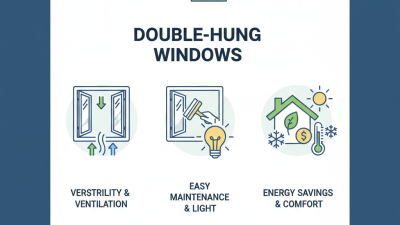
Double-hung windows have two movable sashes that slide vertically within one frame. Both sections can open, unlike single-hung windows with only one moving sash. This arrangement supports flexible ventilation. Opening the upper sash lets warm indoor air escape, while the lower sash draws in cooler air. Small detail, big effect. Tilt-in sashes also make interior glass easier to clean, especially on upper floors.

Chinese manufacturers are often chosen for their production capacity, customization options, and competitive pricing. Experienced factories can produce aluminum, uPVC, or timber-look profiles for different climates. They may also provide double glazing, low-emissivity glass, reinforced locks, and multi-chamber frames. However, product quality varies between factories. Buyers should request material specifications, air and water performance reports, sample windows, and clear warranty terms. A professional supplier should explain tolerances instead of promising perfection.

Factory experience matters during inspection. Check whether the sash moves smoothly and whether the seals meet evenly at every corner. Ask how the manufacturer controls glass thickness, hardware installation, and frame alignment. The cheapest quotation can hide weaker rollers or inconsistent finishing. I would not approve a large order from drawings alone. One sample may reveal a stiff handle, noisy balance system, or poor drainage path. That small test can prevent expensive problems later.

How China’s Double Hung Window Manufacturers Design and Build Their Products

Best China Double Hung Window Manufacturers

China’s leading double-hung window manufacturers begin with climate and installation data. They select aluminum, uPVC, or composite profiles according to strength, insulation, and local weather. Thermal breaks reduce heat transfer through the frame. Reinforced corners improve sash stability during repeated movement.

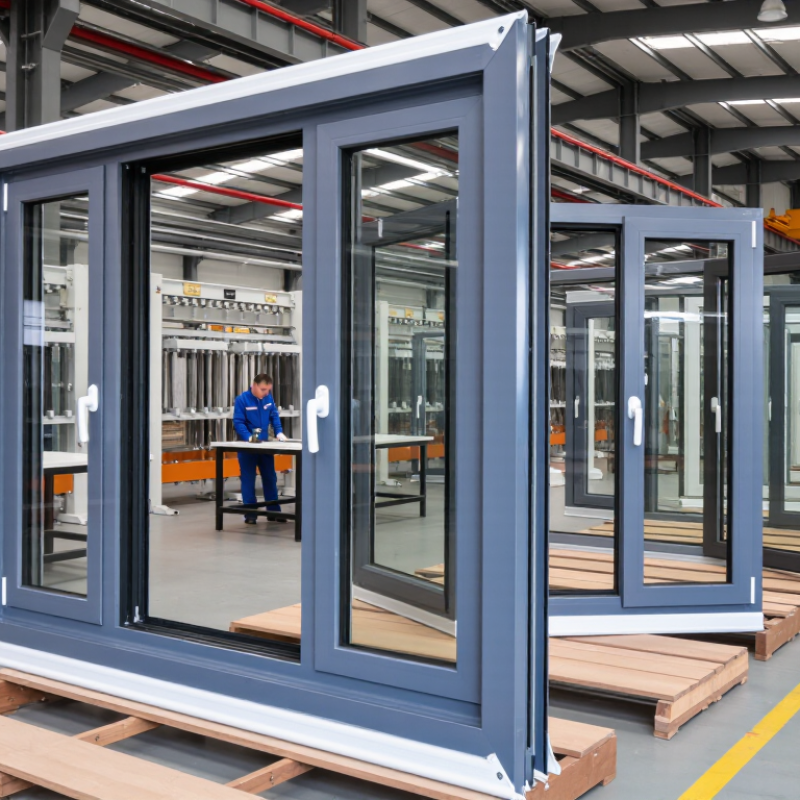
Manufacturing usually starts with profile extrusion, cutting, and precision machining. Workers then install balances, locks, weather seals, and insulated glass units. Factory teams inspect drainage holes and sash alignment before packaging. The U.S. Department of Energy reports that windows can cause 25–30% of residential heating and cooling energy use. Therefore, manufacturers test air leakage, water resistance, and thermal performance. Some facilities also use Low-E glass, argon filling, and warm-edge spacers. These details matter more than decorative finishes.

Tips: Ask for verified U-value, SHGC, air-leakage, and water-penetration results. Check the complete tested window, not only the glass. ASTM and NFRC-based testing can improve comparison reliability. However, factory claims are not always perfectly consistent. One overlooked gasket or rough installation can reduce real performance. IEA’s 2023 buildings report shows that buildings consume about 30% of global final energy. Window design deserves serious attention. A dependable supplier should provide drawings, sample approvals, batch inspection records, and installation guidance.

Best China Double Hung Window Manufacturers - How China’s Double Hung Window Manufacturers Design and Build Their Products
Design & Manufacturing Dimension Common Specification or Practice How It Supports Product Performance Typical Verification or Quality Check
Frame Material Extruded aluminum, uPVC, or hybrid construction; aluminum profiles are commonly produced from 6063-series architectural extrusion alloys. Controls structural strength, weight, corrosion resistance, thermal behavior, and surface-finish options. Profile dimensional inspection, alloy documentation, wall-thickness measurement, and visual surface inspection.
Thermal-Break Design Thermally broken aluminum frames use a low-conductivity polyamide isolator between the interior and exterior aluminum sections. Reduces heat transfer through the frame and helps limit interior condensation in suitable climates. Thermal simulation, isolator engagement checks, corner-joint inspection, and finished-window U-factor testing where required.
Sash Configuration Two vertically sliding sashes; the upper and lower sashes may tilt inward for cleaning and maintenance. Provides adjustable ventilation and allows access to exterior glass from inside the building. Opening-cycle testing, sash alignment checks, tilt-latch operation, and clearance inspection.
Glass Options Single, insulating double, or insulating triple glazing; low-emissivity coatings and inert-gas fills may be specified. Affects heat gain, heat loss, daylight, acoustic performance, solar control, and occupant safety. Glass thickness and type verification, spacer inspection, seal inspection, and safety-glazing documentation when applicable.
Insulating Glass Unit Factory-sealed units typically use an edge spacer, primary seal, and secondary seal to maintain the cavity between panes. Helps preserve insulating-gas retention and reduces the risk of moisture entering the glazing cavity. Sealant continuity, cavity-depth measurement, appearance inspection, and condensation or seal-durability testing as specified.
Weatherstripping Compression seals, pile weatherstrips, or a combination are installed around sash meeting rails and frame contact points. Improves resistance to air leakage, water penetration, dust, and operating noise. Material inspection, continuity checks at corners, compression assessment, and finished-window air and water testing.
Balance System Spring balances, spiral balances, or block-and-tackle systems counterbalance the sash during vertical movement. Determines lifting force, sash stability, ease of operation, and long-term opening performance. Repeated-cycle testing, sash-drop prevention checks, balance-force measurement, and replacement-access inspection.
Locking Hardware Cam locks or multi-point locking arrangements are positioned at the meeting rail or other designated sash locations. Pulls the sashes together, improves weather-seal compression, and supports basic security requirements. Lock engagement, screw-fixing inspection, handle torque checks, and forced-entry testing when required by the target market.
Drainage Design Sloped sill surfaces and concealed or visible weep openings direct incidental water toward the exterior. Reduces water accumulation inside the frame and helps protect internal components and surrounding finishes. Weep-path inspection, blockage checks, sill-slope verification, and laboratory water-penetration testing.
Surface Finishing Aluminum products may receive powder coating or anodizing; uPVC products are commonly produced with colored or laminated surfaces. Provides color consistency and resistance to weathering, abrasion, and surface corrosion. Color comparison, coating-thickness measurement, adhesion testing, and visual inspection for scratches or pinholes.
Fabrication Process Typical operations include profile cutting, machining, corner joining, hardware installation, glazing, sealing, and final assembly. Process control affects frame squareness, sash alignment, seal continuity, and finished-window durability. First-piece approval, in-process dimensional checks, barcode or work-order traceability, and final assembly inspection.
Dimensional Tolerances Manufacturers normally define cutting, squareness, glazing, and hardware-position tolerances according to the product design and applicable standards. Maintains consistent gaps, smooth sash movement, reliable locking, and predictable installation results. Diagonal measurements, gauge checks, visual gap inspection, and sample fit testing before mass production.
Performance Testing Testing may cover air leakage, water penetration, structural loading, operating force, thermal transmittance, and condensation resistance. Provides measurable evidence that the assembled window—not only individual components—meets project requirements. Testing to the codes or standards required by the destination market, with documented sample sizes and test conditions.
Packaging and Shipping Protective film, corner guards, separators, cartons, pallets, and moisture-conscious container loading are commonly used. Reduces the risk of glass breakage, frame deformation, finish damage, and hardware loss during transport. Packaging-drop review, carton labeling, quantity reconciliation, container loading inspection, and pre-shipment photographs.
Project Customization Common variables include opening size, frame depth, glass build-up, color, grille pattern, screens, hardware, and installation accessories. Allows the same basic double-hung concept to be adapted to different climates, building designs, and local installation practices. Approved shop drawings, sample-window confirmation, bill-of-materials review, and production inspection against the approved specification.

Note: Specifications and testing requirements vary by window system, project design, and destination-market building regulations. Actual performance should be confirmed through the manufacturer’s technical documentation and test reports.

Key Features to Compare Among China’s Top Double Hung Window Suppliers

When comparing China’s top double hung window suppliers, start with measurable performance, not showroom appearance. The U.S. Department of Energy reports that windows can account for 25–30% of residential heating and cooling energy use. Ask each factory for verified U-factor, solar heat gain coefficient, visible transmittance, and air-leakage results. NFRC-style ratings make comparisons clearer across different glazing packages.

A reliable supplier should explain its frame alloy, thermal-break design, glass composition, and sash-balance system. Check whether the upper and lower sashes tilt inward smoothly for cleaning. Test records should also cover water penetration, wind resistance, and structural pressure under applicable NAFS procedures. Pay attention to corner joints and drainage paths. These small details often decide whether rain reaches the interior wall. Hardware durability matters too, especially when windows are opened daily in humid coastal conditions. A low quotation can hide thinner profiles, weaker locks, or inconsistent powder coating. Looks can mislead.

Tips: Request samples from the same production batch as your project. Compare the installed window, not only the glass certificate. Confirm inspection stages, packaging methods, replacement-part support, and warranty limits in writing. I would also ask for recent third-party reports, because factory-controlled figures may not reflect installation performance. No supplier is perfect. Even experienced buyers sometimes overlook sash alignment and screen fit. A practical site mock-up can expose those problems before mass production.

Best China Double Hung Window Manufacturers: Key Features to Compare

A practical way to compare double hung window suppliers is to review the performance class and design-pressure range specified under AAMA/WDMA/CSA 101/I.S.2/A440. The ranges below are standard reference bands, not company rankings.

LC, R, CW, and AW represent increasing performance classes. When evaluating a supplier, request accredited laboratory reports confirming the declared class, air leakage, water penetration resistance, structural performance, thermal values, hardware durability, and finish quality for the exact double hung window configuration.

Quality Standards, Certifications, and Factory Evaluation Methods

Choosing among the best China double hung window manufacturers requires more than comparing catalog prices. Quality begins with documented material standards, stable production controls, and clear testing records. Examine the frame alloy, glass configuration, coating thickness, hardware grade, and weather seals. Ask whether each batch receives checks for air leakage, water resistance, wind pressure, and repeated sash operation.

Certifications can support trust, but certificates alone prove little. Verify the issuing organization, test scope, expiration date, and model numbers. A credible factory should provide traceable reports, quality manuals, and calibration records for measuring equipment. It should also explain how defects are recorded and corrected. During a factory visit, inspect extrusion storage, glass handling, assembly stations, and final inspection areas. Clean workspaces help, but they do not guarantee good windows.

Request samples from regular production, not specially prepared units. Measure frame dimensions and inspect corner joints, drainage holes, locking points, and seal compression. Open and close the sash repeatedly. Feel for uneven resistance. Review packaging, labeling, and loading procedures because damage often occurs after inspection. Video audits are useful, though they cannot replace an in-person evaluation. I have found that some suppliers answer technical questions well but provide weak evidence afterward. That gap deserves attention. A factory may also pass one test and still struggle with consistency across large orders. Record findings, compare corrective actions, and require approval samples before production begins.

How to Select the Best China Double Hung Window Manufacturer for Your Project

Best China Double Hung Window Manufacturers

Selecting the best China double hung window manufacturer requires more than comparing prices. Start by checking factory experience with similar residential or commercial projects. Ask for production photos, sample profiles, and recent test reports. A reliable manufacturer should explain glass options, frame materials, hardware grades, and weather-sealing methods clearly.

Performance matters in daily use. Request air infiltration, water resistance, and wind-load data for the exact window series. Do not accept general figures from another product. Inspect a physical sample, especially the balance system, locks, corners, and drainage holes. Move the sashes repeatedly. They should slide smoothly without rattling. Small details often expose weak assembly control.

Communication can affect the entire project. Confirm drawings, tolerances, packaging, delivery schedules, and replacement procedures in writing. The manufacturer should support technical questions before production, not only after payment. Factory audits or independent inspections add useful evidence. A low quotation may look attractive, but it can exclude screens, upgraded glass, or proper export packaging. That mistake becomes expensive later. I would also compare warranty terms carefully, because a long warranty means little without responsive service. Some buyers focus too heavily on appearance. In practice, installation guidance and consistent dimensions may matter more. Leave room for honest review: no supplier is perfect, and small delays or sample changes can happen. The strongest partner identifies risks early and offers practical corrections.