China Top 10 Vinyl Replacement Windows Suppliers
China has become a major manufacturing base for vinyl replacement windows, serving residential, commercial, and renovation markets worldwide. However, choosing a dependable supplier requires more than comparing catalog prices. Product quality, extrusion consistency, glazing performance, hardware durability, and export experience all influence long-term value.
Energy performance matters. The U.S. Department of Energy states that windows can account for approximately 25% to 30% of residential heating and cooling energy use. The International Energy Agency also identifies buildings as responsible for roughly 30% of global energy demand. These figures explain why frame design, low-emissivity glass, airtight seals, and installation support deserve careful review. A lower purchase price may become expensive when condensation, air leakage, or early hardware failure appears.
This guide presents China’s top 10 vinyl replacement windows suppliers through practical sourcing criteria. It considers manufacturing capacity, product certifications, customization, quality control, warranty policies, and international delivery experience. ENERGY STAR guidance and regional building requirements also provide useful benchmarks for evaluating thermal performance. Supplier claims should still be checked against test reports, factory audits, sample inspections, and customer references. Some information remains self-reported. That is an unavoidable weakness.
A ranking is never perfectly objective. Market position can change quickly. Yet a structured comparison can help importers, contractors, and distributors make better decisions. Expect clear strengths, visible limitations, and a few findings that may challenge common assumptions about Chinese window manufacturers.
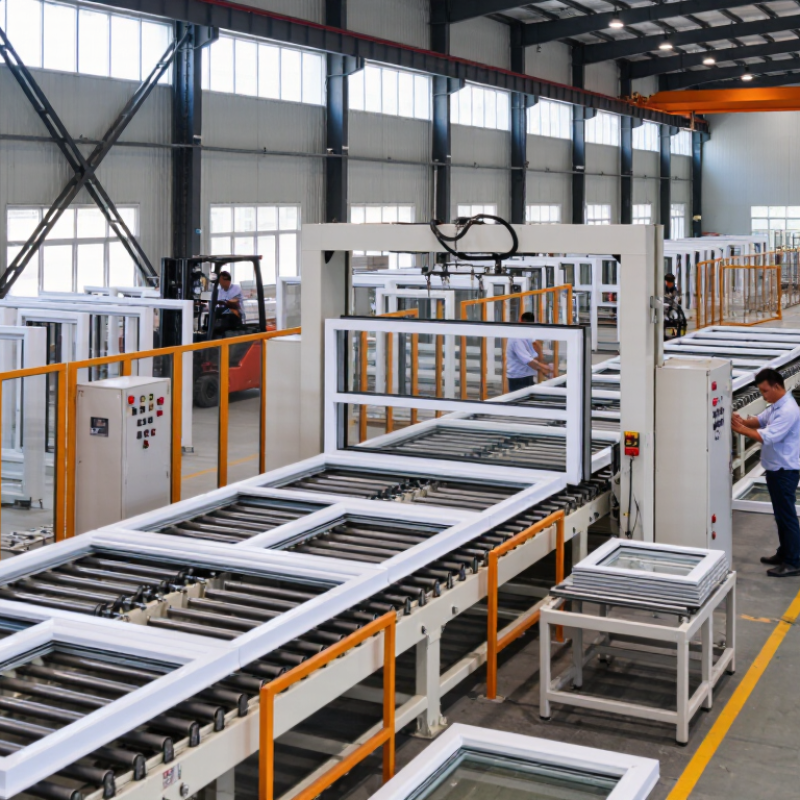
What Defines a Quality Vinyl Replacement Window Supplier in China
China Top 10 Vinyl Replacement Windows Suppliers
What Defines a Quality Vinyl Replacement Window Supplier in China
A quality vinyl replacement window supplier proves performance before discussing price. In my sourcing experience, the strongest factories share tested U-values, air leakage, water penetration, and structural ratings. These figures should come from accredited laboratories, not only internal inspection sheets. The U.S. Department of Energy reports that windows can cause 25–30% of residential heating and cooling energy use. That makes thermal evidence commercially important.
Material control reveals another difference. Reliable suppliers specify vinyl resin grades, weather-resistant additives, steel reinforcement, and gasket compounds. They should explain how profiles resist yellowing, warping, and brittle corners after prolonged exposure. NFRC certification procedures also show why whole-window performance matters. Glass, spacer, frame, and installation design must be evaluated together. A low center-of-glass U-value can still hide a weak frame.
Look beyond the showroom.
A supplier should provide batch records, welding-temperature controls, dimensional checks, and packaging tests. ISO 9001 certification supports process discipline, but it does not guarantee every shipment. That point is easy to forget. Independent testing and traceable corrective actions offer stronger reassurance. ENERGY STAR guidance also emphasizes climate-specific window selection, rather than one universal specification.
I would request recent test reports, factory videos, sample sections, and references from comparable projects. Yet samples can be unusually polished. Repeated production audits are more revealing. A dependable Chinese supplier communicates limitations clearly, including lead times, color restrictions, and installation risks. That honesty may feel less impressive, but it usually protects the project better.
China Top 10 Vinyl Replacement Windows Suppliers: Quality Evaluation Framework
This chart presents a supplier-screening framework based on key quality dimensions commonly used for vinyl replacement windows. The percentages are evaluation weights, not company rankings, market share, or brand performance data.
Thermal performance receives the highest weighting because lower U-factor values improve insulation efficiency. Air leakage, water resistance, structural performance, and durability are also essential for long-term window reliability and compliance with project requirements.
Key Criteria for Comparing China’s Top Vinyl Window Manufacturers
Comparing China’s top vinyl replacement window suppliers requires more than reviewing glossy catalogs. Start with manufacturing experience, production capacity, and documented quality controls. Ask how the supplier tests frame strength, air leakage, water resistance, and wind pressure. Reliable manufacturers should provide recent test reports, clear material specifications, and traceable inspection records. Look closely at the vinyl profile, reinforcement steel, glazing system, seals, and hardware. Small details often affect service life.
Request a physical sample before placing a large order. Check whether the sash opens smoothly, locks firmly, and closes without uneven gaps. Compare glass options, Low-E coatings, spacer systems, drainage paths, and color consistency. A professional supplier should explain thermal performance in practical terms, not only show impressive figures. Export experience also matters. Confirm packaging methods, lead times, replacement-part support, warranty terms, and communication procedures. A polished factory visit is useful, but it cannot replace independent evidence.
Tips:
Create a comparison sheet with identical questions for every supplier. Record test standards, profile thickness, glass structure, hardware grade, and quoted tolerances. Ask for photos of routine inspections, not only finished products. Consider ordering a small trial batch first. It costs more time. That may prevent expensive mistakes. I would also review installation guidance carefully, because even a well-made window can perform poorly when fitting details are ignored. Some suppliers may answer slowly or provide incomplete documents. Treat that as a warning, but allow room for honest clarification.
Top 10 China-Based Vinyl Replacement Window Suppliers
China-Based Vinyl Replacement Window Suppliers
China-based vinyl replacement window suppliers serve residential projects, renovation contractors, and distributors across many climates. Grand View Research identifies energy efficiency and replacement demand as major drivers in the global windows market. Its industry analysis also highlights rising use of low-emissivity glass and insulated frames. These trends influence Chinese factories, where uPVC profiles, welded corners, multi-chamber frames, and double glazing are common specifications.
Look closely at production evidence. A reliable supplier should provide profile test results, glass configuration data, air-leakage ratings, water-resistance records, and documented quality inspections. The U.S. Department of Energy states that low-emissivity glazing can reduce heat transfer through windows, although actual savings depend on installation and climate. That detail matters. A well-made window can still perform poorly with uneven shims or weak perimeter sealing.
Supplier comparisons should include sample consistency, tooling control, packaging strength, and replacement-part availability. ISO 9001 certification may support process discipline, but it does not guarantee every shipment is flawless. Ask for recent third-party test reports, not only factory photographs. Data from different laboratories is not always directly comparable. That is an uncomfortable limitation. Lead times also change with customization, glass type, and export volume. Clear drawings and written tolerances reduce avoidable disputes. Temperature, wind exposure, and local building requirements should guide the final specification.
Product Range, Customization, Certifications, and Export Capabilities
China Top 10 Vinyl Replacement Windows Suppliers
When comparing China’s top 10 vinyl replacement window suppliers, product range matters more than catalogue size. Reliable manufacturers should offer single-hung, double-hung, sliding, casement, tilt-and-turn, and fixed windows. Options should include Low-E glass, argon filling, laminated glass, reinforced frames, and several color finishes. Grand View Research valued the global windows and doors market at about USD 207 billion in 2022, with continued growth expected through 2030. This demand increases pressure on suppliers to prove real performance, not just attractive samples.
Customization should cover opening sizes, frame depths, glazing thickness, hardware finishes, drainage design, insect screens, and protective packaging. Ask for thermal data, air infiltration results, water resistance, and wind-load testing. For export projects, ISO 9001 supports process control, while EN 14351-1 and CE-related documentation may support European applications. North American buyers often request NFRC ratings, U-factor values, and solar heat gain data. Certifications require careful checking. A copied certificate is not useful.
Strong suppliers can provide shop drawings, sample approvals, pallet plans, container loading photos, and clear Incoterms. Their teams should explain lead times honestly, especially for custom colors or unusual glazing. A supplier claiming every certification deserves scrutiny. I would also inspect weld quality, corner alignment, gasket compression, and hardware movement by hand. One weakness remains common: impressive factory videos may reveal little about after-sales service. References from similar climates are more convincing than polished promises.
How to Select the Right Chinese Supplier for Your Replacement Window Project
China Top 10 Vinyl Replacement Windows Suppliers
Choosing a Chinese supplier requires more than comparing catalog prices. Check manufacturing experience, vinyl profiles, glass options, and export records. A reliable factory should explain its production process clearly. Ask for test reports, sample units, and project references from similar climates. Inspect the welds, drainage holes, hardware movement, and gasket fit. Small defects often become expensive after installation.
Communication matters just as much as technical quality. Confirm window dimensions, opening direction, color, glazing, packaging, and delivery terms in writing. Request drawings before production begins. A professional supplier should identify risks instead of promising everything immediately. Factory audits, video inspections, or an independent quality check can reveal details that online conversations miss. I have found that overly perfect claims deserve a second question.
Tips: Compare at least three suppliers. Test samples before placing a large order. Review warranty coverage, replacement-part access, and response times. Ask how the supplier handles damaged cartons or incorrect sizes. Do not select the lowest quotation automatically; a cheaper frame may use weaker reinforcement or less suitable glass. Your building location also matters, because coastal air, strong sunlight, and winter temperatures require different specifications. Be ready to revise your checklist after the first sample, since real measurements sometimes expose assumptions.