Choosing among the China Top 10 Sash Windows Manufacturers requires more than comparing attractive catalog photographs. Global buyers need evidence of production experience, technical control, export reliability, and honest after-sales support. This introduction examines manufacturers serving residential, heritage, and commercial projects with different performance requirements.
A strong supplier should explain timber species, sash weights, glazing options, weather seals, coating systems, and hardware finishes. Factory photographs help, but independently verified samples reveal more. Check corner joints, pulley movement, paint coverage, and glass seating. Small defects often become expensive problems.
John Leeke, a respected historic-window consultant, has repeatedly emphasized that “repair is usually better than replacement.” That principle also matters when evaluating new sash windows. A manufacturer should understand traditional proportions while meeting modern expectations for thermal performance and durability. However, no supplier is perfect. A beautifully made window can still fail through poor packaging, unclear tolerances, or weak installation guidance.
The companies discussed in this guide are considered through practical buyer questions. Can they produce consistent dimensions? Do they manage export documentation responsibly? Can they provide test reports, drawings, and replacement hardware? Are their lead times realistic? Price remains important, but the lowest quotation may hide thinner materials or limited support. Buyers should request physical samples before approving large orders.
This overview does not replace independent verification. Conditions vary between climates, building codes, and project types. Still, it offers a useful starting point for comparing sash windows manufacturers in China. The aim is simple: fewer assumptions, better questions, and more dependable purchasing decisions.
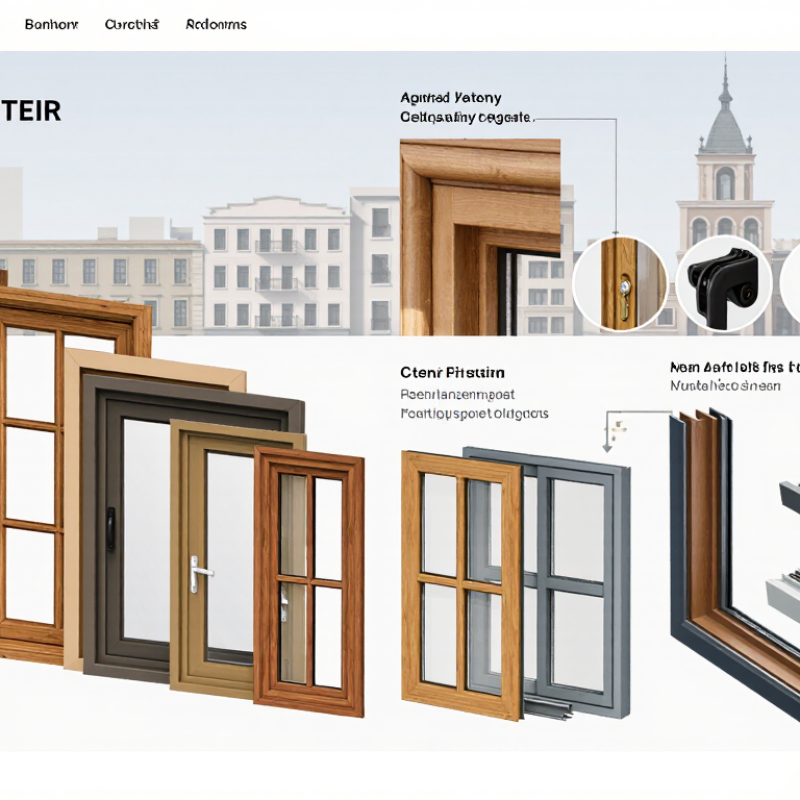
Sash windows are vertical sliding windows built with one or two movable panels, called sashes. Traditional designs use cords and counterweights; modern versions often use spring balances. Their tall proportions create a familiar architectural rhythm, while the sliding action allows controlled ventilation without swinging into a room.
Global buyers choose sash windows for more than appearance. They suit heritage renovations, narrow streets, and rooms where outward-opening windows may obstruct pathways. The U.S. Department of Energy’s Energy Saver guidance estimates that windows can cause 25–30% of residential heating and cooling energy use. For this reason, reputable Chinese manufacturers increasingly offer insulated glass, weather seals, low-emissivity coatings, and thermally improved frames. Small details matter. A tight lock and smooth balance can change daily comfort.
Performance still needs honest evaluation. The IEA’s Buildings 2023 report states that buildings account for about 30% of global energy demand. Yet a slim sash frame alone does not guarantee efficiency. Poor installation can leave cold edges, rattling joints, or visible air leakage. I have seen attractive samples perform poorly when drainage paths were ignored. Buyers should request U-values, air-leakage results, glass specifications, and installation tolerances. These documents reveal more than polished photographs. Even then, local climate and maintenance habits may challenge the original design. Tradition helps, but it cannot replace testing.
How to Evaluate Sash Window Manufacturers in China
Choosing among China’s top sash window manufacturers requires more than comparing online prices. Inspect the factory’s production line, not only its showroom. Check timber moisture levels, aluminum thickness, glass specifications, and corner joints. A reliable manufacturer should explain each tolerance clearly. Ask for recent project references and export experience in your target market. Factory photos help, but a live video inspection is stronger evidence.
Request a complete sample before placing a large order. Test the sash movement, locking force, drainage, and weather seals. Measure the frame with a caliper. Small gaps often become costly installation problems. Review test reports for air leakage, water resistance, wind pressure, and thermal performance. Reports should identify the tested product, date, laboratory, and standard used. Be careful with vague certificates. They may sound impressive but prove little. My own evaluation would still include an independent inspection, because paperwork can miss inconsistent batch quality.
Tips: Use a written checklist for every supplier. Compare identical specifications, not attractive quotations. Confirm packaging with corner protection, moisture barriers, and labeled glass. Ask how the factory handles damaged units and replacement parts. Clarify lead times, inspection points, payment stages, and warranty limits in the contract. Keep communication records. One overlooked detail, such as left- or right-hand opening, can delay an entire container. Also, do not assume the cheapest offer is efficient. I sometimes prioritize communication speed over a minor price difference, although this judgment can be imperfect.
Anonymous buyer evaluation matrix based on internationally recognized window-performance requirements and practical supplier-verification methods
| No. | Evaluation Dimension | Recommended Benchmark for a Capable Manufacturer | Evidence Global Buyers Should Request | Relevant Standard or Reference |
|---|---|---|---|---|
| 1 | Product Scope and Sash Configuration |
Core Capability Demonstrated experience with single-hung, double-hung, vertical sliding, tilt-in, or heritage-style sash windows, including timber, uPVC, and aluminium options where applicable. |
Technical drawings, section details, opening-size limits, sash-weight limits, drainage design, glazing options, hardware schedules, and project photographs that can be independently verified. | Product-specific engineering documentation; project specifications; applicable local building codes. |
| 2 | Thermal Performance |
Energy Efficiency The manufacturer should provide whole-window U-value data rather than only frame or glass values. Results should identify the frame material, glazing build-up, spacer, dimensions, and calculation or test method. |
Certified test reports or calculation reports showing Uw, Ug, frame Uf, glass specification, spacer type, and reference window size. | EN ISO 10077-1 and EN ISO 10077-2; ISO 12631 for curtain walling where relevant. |
| 3 | Air Permeability |
Weather Performance Performance should be tested on a complete assembled window, including the meeting rail, seals, operating hardware, and glazing. |
Laboratory report stating test size, pressure sequence, measured air leakage, product configuration, and classification. | EN 1026 for testing and EN 12207 for classification; ASTM E283 may be relevant for North American projects. |
| 4 | Watertightness |
Weather Performance The design should include suitable weather seals, sill drainage, weep paths, and protection at the meeting rail and jambs. |
Water-tightness test report identifying the test pressure, exposure duration, window orientation, specimen size, and observed leakage point. | EN 1027 for testing and EN 12208 for classification; ASTM E331 may be relevant for North American projects. |
| 5 | Wind Resistance and Structural Design |
Structural Safety Structural calculations or tests should account for sash size, glass weight, frame material, mullion or meeting-rail design, hardware, and anchorage. |
Wind-load calculation, deflection limits, pressure-test results, maximum manufacturing dimensions, and fixing recommendations for the target market. | EN 12211 for testing and EN 12210 for classification; project-specific wind-load codes must also be checked. |
| 6 | Materials, Coatings, and Durability |
Service Life Material specifications should identify timber species and moisture control, uPVC formulation, aluminium alloy and finish, seal types, hardware materials, and corrosion protection. |
Material certificates, coating specifications, accelerated-weathering or corrosion-test records, timber moisture-control procedures, and maintenance instructions. | ISO 12944 for corrosion protection principles; ISO 4892 series for artificial weathering; project-specific material requirements. |
| 7 | Glazing and Safety Configuration |
Glass Compliance The manufacturer should support suitable double or triple glazing, safety glass where required, compatible glazing beads, drainage, setting blocks, and sealed insulating glass units. |
Glass make-up, safety-glazing declaration, insulating-glass-unit documentation, edge-clearance details, sealant compatibility data, and sample inspection records. | EN 12150 for thermally toughened soda-lime silicate safety glass; EN 14449 for laminated glass; local safety-glazing regulations. |
| 8 | Acoustic Performance |
Noise Control Acoustic claims should be based on the complete window assembly, not glass alone. The report should state the tested configuration and weighted sound-reduction value. |
Laboratory acoustic report, glazing build-up, frame and seal configuration, test dimensions, and declared Rw or equivalent market-specific rating. | ISO 10140 series for laboratory sound insulation testing and ISO 717-1 for rating airborne sound insulation. |
| 9 | Quality Management and Production Control |
Manufacturing Reliability A reliable supplier should operate documented incoming-material inspection, process control, dimensional checks, glazing inspection, final functional testing, and corrective-action procedures. |
Current quality-management certificate where claimed, inspection plans, nonconformity records, calibration records, batch traceability, and a proposed pre-shipment inspection checklist. | ISO 9001 quality-management principles; independent factory audit and product inspection are recommended. |
| 10 | Export Readiness and Project Support |
Global Buyer Fit The supplier should provide export packaging, installation guidance, shop drawings, compliance documents, spare-parts support, warranty terms, and clear Incoterms and lead times. |
Packing specification, container-loading plan, installation manual, warranty document, replacement-parts list, sample commercial invoice, HS-code proposal, and references from comparable export projects. | Incoterms® 2020 for delivery terms; destination-country customs, labeling, building-code, and product-compliance requirements. |
China’s Top 10 Sash Window Manufacturers attract global buyers with broad product choices, competitive pricing, and flexible customization. The strongest suppliers usually offer timber, uPVC, or aluminum sash windows for different climate conditions. Their quality depends on more than appearance. Buyers should examine frame corners, glazing seals, pulley movement, drainage holes, and coating consistency.
A serious factory should provide clear drawings, material specifications, performance reports, and traceable production records. Ask how workers control moisture in timber, weld uPVC frames, or protect aluminum surfaces. Request recent testing evidence for air leakage, water resistance, wind pressure, and thermal performance. Certifications can help, but verify their issuing body and current scope. A polished showroom may still hide weak quality control. That point deserves attention.
Tips: Compare at least three samples from the top 10 manufacturers. Measure sash alignment with a simple ruler. Open each window repeatedly. Check whether the lock feels firm, the glass sits evenly, and the frame remains stable. Confirm packaging details, replacement-part support, lead times, and inspection procedures before payment. Sample approval is useful, but it is not the whole answer. Factory capacity can change during busy seasons, and small hardware differences may affect installation. A third-party inspection adds confidence, though it cannot replace a clear contract and detailed technical drawings.
China’s top sash-window manufacturers serve buyers with very different climate and conservation needs. Material selection comes first. Engineered timber offers warmth, repairability, and traditional grain. Aluminium provides slim sightlines and strong resistance to weather. uPVC usually reduces maintenance and production cost. Hybrid frames can balance these benefits, but their joints need careful inspection.
Glass changes performance significantly.
The U.S. Department of Energy reports that low-emissivity windows can reduce energy loss by about 30–50% compared with standard windows.
Double glazing suits many projects, while triple glazing helps in colder regions. However, heavier glass demands stronger balances, hinges, and installation details. A beautiful specification can still fail when the frame twists.
The IEA’s Buildings 2023 report states that buildings consume about 30% of global final energy and create roughly 26% of energy-related emissions.
Sash-window customization should therefore include orientation, solar control, air leakage, and local weather exposure. Buyers can request top-hung or vertical sliders, narrow meeting rails, concealed drainage, acoustic glass, and specific RAL colours. Ask for tested U-values, air-permeability results, and production samples. ISO 10077-1 supports thermal-transmittance assessment. Yet catalog figures are not the whole story. Site measurements, glazing tolerances, and installer skill often decide real performance. I would allow a small design compromise for easier maintenance. That choice is rarely regretted.
When screening China’s top ten sash window manufacturers, compare complete quotations, not headline prices. Ask each supplier to price the same window size, glazing, frame material, hardware, finish, screens, packaging, and order quantity. A low quote may exclude protective crates or inland delivery. That gap matters.
I recommend requesting a cost breakdown with tooling, samples, inspection, freight, and payment terms shown separately. During one supplier review, I found a cheaper window used thinner glazing than the reference model. It looked acceptable in photos. It was not an equal comparison. Request physical samples, section drawings, and written performance data before approving production. Keep records.
Certification checks require careful attention. Verify the certificate number, issuing organization, validity period, and covered product range. A factory certificate may not apply to every sash window model. Confirm test standards for air leakage, water resistance, thermal performance, and hardware durability where relevant. Export experience also deserves evidence. Ask for anonymized shipping documents, realistic lead times, loading photos, and a sample commercial invoice. Reliable suppliers explain Incoterms, carton labeling, moisture protection, and replacement procedures clearly. Slow replies are not automatic disqualifiers, but vague answers deserve caution. I would also confirm who manages inspections and after-sales claims. Small details often reveal operational weakness.