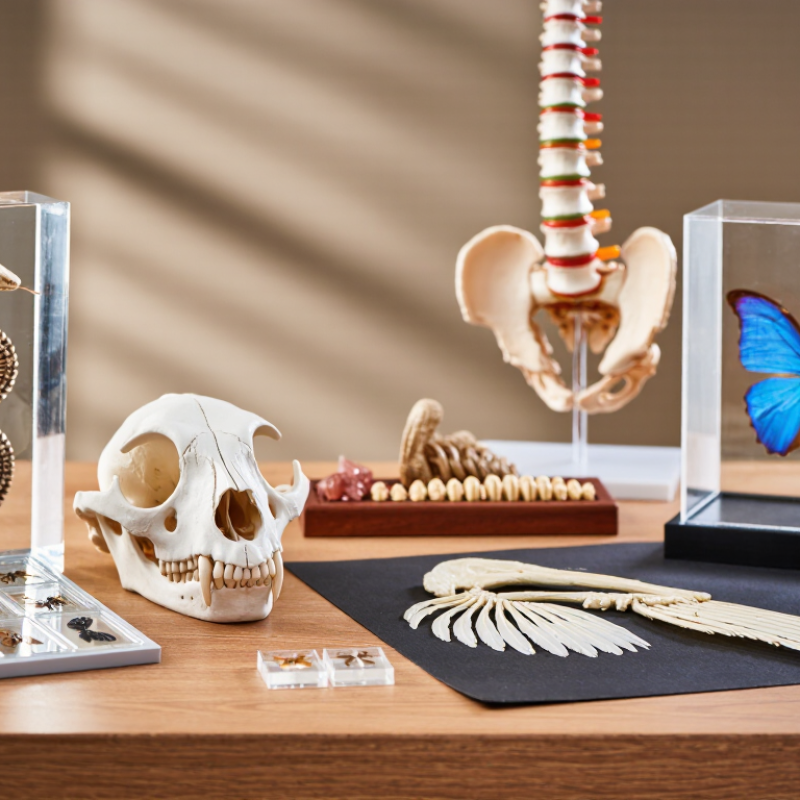
Global buyers of animal specimens need more than an attractive display piece. They need clear records, responsible sourcing, and preservation suited to their purpose. This guide introduces ten commonly sought specimen types, from ethically sourced skeletal replicas and educational models to prepared slides and naturally shed materials. Each serves a different role. A labeled skull can support a classroom lesson; a microscope slide reveals details the naked eye misses. Small differences matter.
Before purchase, check the specimen’s scientific identification, origin, condition, and documentation. Confirm that the supplier can explain how it was obtained and preserved. Requirements vary by destination, so buyers should verify applicable rules with relevant authorities before ordering. Avoid items with unclear provenance. That caution is practical, not dramatic. As primatologist Jane Goodall has said, “What you do makes a difference, and you have to decide what kind of difference you want to make.” Her words offer a useful ethical lens for evaluating animal collections, even though they were not about specimen purchasing specifically.
Aniaml Specimen buyers should also consider storage needs, intended use, and the supplier’s return and handling policies. A delicate insect mount may require a dry, stable environment; a resin-encased teaching sample needs different care. No single type suits every collection. And a polished finish does not prove quality. This overview helps global buyers compare options carefully, ask better questions, and prioritize traceable, responsibly handled specimens. Some details will still need review. That is part of buying well.
An animal specimen is a preserved whole organism, a prepared part, or material such as a feather, shell, bone, or tissue sample. In collection records, the term describes an item kept for study, education, reference, or display. It does not prove the item’s origin or suitability. Classification begins with identity: a common name, a scientific name when reliably known, and a broad group such as mammal, bird, fish, or invertebrate. Labels matter.
Specimens can also be classified by form and preparation: whole mount, dry skin, skeleton, fluid-preserved sample, shell, or microscope slide. Record condition too, noting whether an item is intact, repaired, faded, or incomplete.
A small glass vial and a mounted skeleton need different handling, even when they represent the same species. Purpose adds another useful category, such as teaching reference or anatomical study. These categories overlap. Not always.
Reliable records link a specimen to a documented source, collection date where available, preparation method, and any required permissions or paperwork. Scientific names should be checked against credible taxonomic references because names and groupings can change. Buyers should request clear photographs, an accurate description, and provenance documents before making decisions. A label can be wrong. If identification remains uncertain, state that rather than guessing; an honest gap is more useful than false precision. Requirements vary by location, so verify applicable rules before acquisition or shipment.