How to Choose an Intelligent Pole for Your Project?
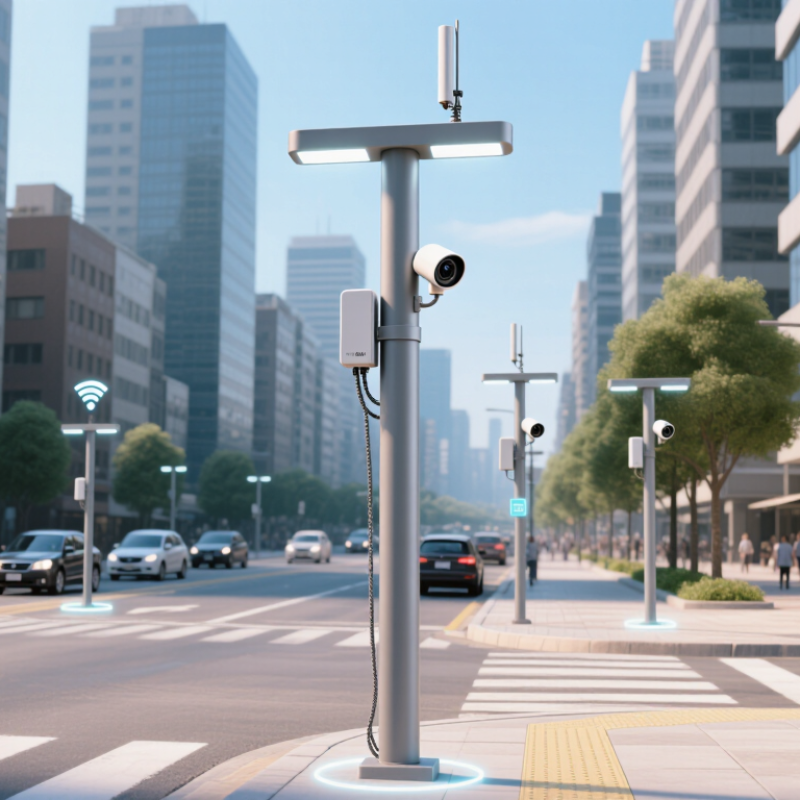
An Intelligent Pole is more than a light column with sensors attached. It can combine LED lighting, cameras, environmental sensors, public Wi-Fi, and communications equipment on one street asset. The right choice depends on what the site needs—not how many features fit on a specification sheet. A narrow downtown sidewalk, for example, may need compact equipment and careful glare control. A wide road may call for different lighting, mounting, and maintenance plans.
The United Nations’ World Urbanization Prospects: The 2018 Revision projects that nearly 68% of the global population will live in urban areas by 2050. ITU’s Facts and Figures 2023 estimates that 5.4 billion people were using the internet that year. These figures do not prove that every street needs a connected pole. They do show why cities must plan infrastructure around growing urban populations and digital services. Smart-city strategist Boyd Cohen captures the people-first principle: “Smart cities are not about technology, they are about people.”
For project teams, selection starts with a site survey: pole spacing, power access, existing network coverage, weather exposure, and maintenance reach. Then compare load capacity, modularity, cybersecurity support, interoperability, and the supplier’s service commitments. Ask for test results and references from installations in similar conditions. A demo under showroom lighting is not enough. Neither is a long feature list. Some requirements will change after deployment; plan for that, and document what remains uncertain.
Define the Project’s Goals and Required Pole Functions
Before comparing intelligent poles, define the problem the project must solve. Is the goal safer nighttime visibility, better traffic data, or more reliable public connectivity? Write down the intended outcome in measurable terms, such as reducing dark areas along a 600-metre walkway or monitoring air quality near a busy intersection. Keep it practical. A broad goal like “make the area smarter” is difficult to evaluate.
Next, match each goal to a pole function. A road corridor may need adaptive LED lighting and traffic sensors, while a public plaza may benefit from Wi-Fi access points and environmental monitoring. Add cameras or emergency call points only when they serve a clear operational need. Every device affects power demand, network capacity, installation, and ongoing maintenance. Small details matter. For example, tree canopies can block sensors, and nearby buildings may weaken wireless signals.
Check the site before fixing the specification. Measure pole spacing, inspect existing power access, and note exposure to wind, salt, dust, or vehicle spray. Ask who will review sensor data and who will respond when a device fails. A pole with many functions can look efficient on paper, yet become harder to maintain if components require different service schedules. Leave room for future needs, but avoid paying for features with no defined use. A short site survey may reveal that fewer, better-placed functions are the more dependable choice.
How to Choose an Intelligent Pole: Match Functions to Project Goals
Compare example priority scores for common project types before selecting pole functions. Scores use a 1–5 planning scale, where 1 means low priority and 5 means essential; they are illustrative, not measured field data.
Use the project’s safety, connectivity, lighting, and environmental-monitoring goals to set priorities. Confirm power, network, mounting, and maintenance requirements before finalizing the pole design.
Assess Site Conditions and Existing Infrastructure
Before choosing an intelligent pole, walk the site at different times of day. Note sunlight, shade, wind exposure, drainage, and nearby trees. A location that looks clear at noon may be shaded in winter or blocked by parked vehicles. Check pedestrian routes and sightlines, too. Small placement choices can affect lighting, cameras, sensors, and maintenance access.
Assess existing infrastructure carefully. Confirm the position of underground utilities before planning foundations, and check nearby power sources, network coverage, and available connection capacity. Review existing poles, cabinets, and conduits for their condition and ownership. Record cable routes and measure distances rather than relying only on old drawings. A neat map is not always the truth; field conditions can differ, and that can change the project cost. It is worth admitting when a site needs another survey.
Tips: Take photos from several angles, and mark proposed pole locations on a simple site plan. Ask utility and network providers to verify connection details. Leave room for a service vehicle and safe maintenance work. If coverage is uncertain, test it on site. These checks may feel slow, but they can prevent awkward redesigns later.
Compare Pole Designs, Materials, and Smart Technologies
Choosing an intelligent pole means comparing the structure, not just its sensors. A tapered steel pole suits exposed roads and heavy equipment, but needs durable corrosion protection. Aluminum is lighter and easier to handle; fiberglass resists corrosion, though repairs and local availability deserve checking. A neat specification can still fail on a windy corner. Review the foundation, wind loading, access doors, and room for future cabling before selecting a finish. Small details matter. The U.S. Department of Energy’s 2017 report, Adoption of Light-Emitting Diodes in Common Lighting Applications, describes energy savings of 50% or more for LED street lighting compared with conventional sources. That makes the luminaire and its controls important parts of the pole decision.
Smart technologies change the comparison. Dimming controls can reduce output when streets are quiet, while environmental sensors, cameras, and wireless radios add power, heat, and maintenance needs. The International Energy Agency estimates that lighting uses about 15% of global electricity, making efficient operation a practical project concern. Yet more devices do not automatically mean a smarter installation. Check mounting positions, network coverage, electrical capacity, and how technicians will reach each component. A modular pole can simplify upgrades, but extra joints and equipment may complicate inspection. I would avoid promising a fixed payback without local energy rates, operating schedules, and maintenance costs. Those numbers vary.
Check Compatibility, Safety Standards, and Future Expansion
How to Choose an Intelligent Pole for Your Project?
Check Compatibility, Safety Standards, and Future Expansion
An intelligent pole is only useful when its components work together. Check the available power, mounting space, network connection, and heat limits before choosing cameras, sensors, or wireless equipment. Confirm that control systems support open, documented interfaces, so future devices can communicate without a costly redesign. Small details matter.
Check structural loading and local electrical requirements, too. IEC 60529 defines ingress-protection ratings, while IEC 62262 classifies resistance to mechanical impact; specify suitable ratings for the site’s weather and exposure. The U.S. Department of Energy’s 2017 report on LED adoption estimates street-lighting energy savings of 50–70% compared with legacy sources. Actual results depend on the lighting system and operating conditions.
Plan for growth, not just the first installation. Reserve electrical capacity, spare conduit, network ports, and accessible mounting points. McKinsey Global Institute’s 2018 Smart Cities report estimates that digital applications could reduce emergency-response times by 20–35% across city systems—not through poles alone. Keep that distinction clear. A spare cable route may look unnecessary on opening day, yet adding one later can mean traffic control, new excavation, and avoidable disruption. Drawings also rarely capture every future sensor, so leave room for adjustment.
Evaluate Total Cost, Maintenance, and Supplier Support
An intelligent pole can look affordable on a quotation and become costly over time. Compare the full cost of ownership, not just the purchase price. Include foundations, cabling, installation equipment, connectivity fees, software, and replacement parts. Ask how long key components are expected to last, and whether upgrades require a site visit. Small costs add up.
Maintenance needs deserve equal attention. Check how technicians access cameras, sensors, lighting controls, and power units. A design that requires a lift for every minor repair can create delays and added expense. Request a maintenance schedule with estimated labor hours and common spare parts. Then test those assumptions against local weather, traffic, and site access. A spreadsheet helps, but it cannot predict every repair; some estimates will need revisiting after installation.
Supplier support can determine whether the system stays useful after commissioning. Ask who handles setup, software updates, fault diagnosis, and staff training. Confirm typical response times, support hours, spare-part availability, and the process for escalating unresolved issues. Request sample technical documents and a clear warranty scope. Ask for a support plan in writing. A polished presentation is not enough. Compare how suppliers explain difficult scenarios, such as a failed controller or interrupted connectivity. Clear answers now can prevent avoidable downtime later.